

10 July | 6 min read
Digital transformation is a widely discussed topic in the business world. In recent years, this shift towards a digital era has accelerated. Companies have begun investing millions in cutting-edge software and new platforms, aiming to achieve successful digital transformation. However, many employees are struggling; adoption rates remain low, costs are rising, and the expected results are still not being realized.
Although digital transformation is a rapid process that can enhance customer experience and create new revenue streams, many companies find it challenging to adapt. What seems easy is often more complicated than anticipated. According to the research, it is known that a significant percentage of digital transformation initiatives fail to achieve their expected business outcomes. Despite substantial investments in technology, many organizations struggle to realize measurable value from their transformation efforts.
In this article, we will explore the reasons behind the failure of digital transformation initiatives and how successful companies avoid costly mistakes. We will also identify common mistakes that hinder progress, helping businesses to develop effective digital transformation strategies that deliver the desired results and provide long-term value.
Digital transformation refers to how an organization functions, enhances customer experiences, and generates value through digital capabilities. A successful transformation involves several key elements: automating business processes, improving customer experiences, fostering a culture of innovation, utilizing data-driven decision-making, and enhancing operational efficiency.
However, it’s crucial to consider why digital transformation fails. Below are some common digital transformation failure reasons that can help companies avoid costly mistakes.
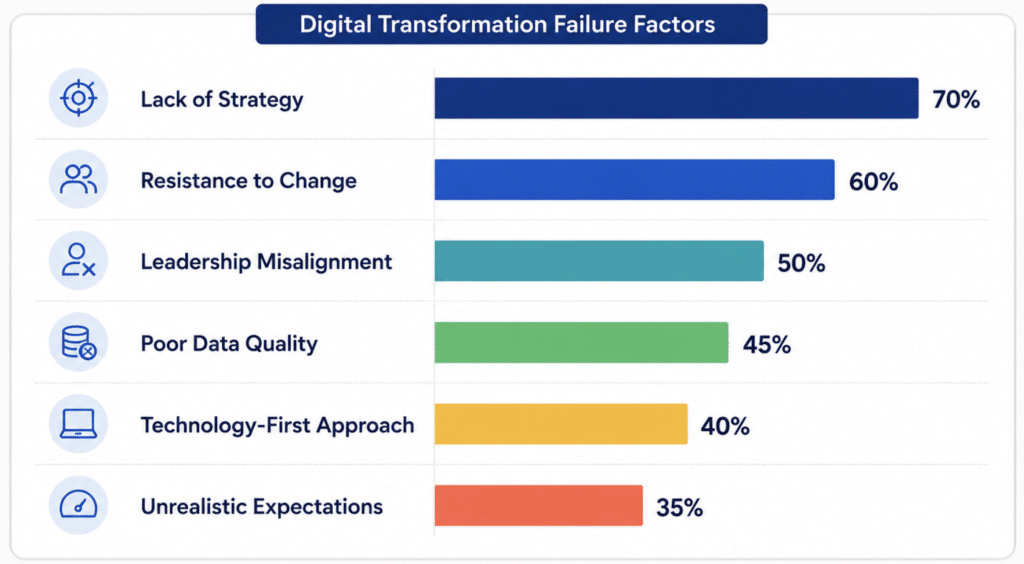
Let’s understand them one by one.
Companies invest in costly software without defining the expected results and business outcomes. Let’s take an example: a company might spend millions on AI tools because its competitors are doing the same. However, it’s crucial for a company to first consider how these tools align with its own goals and objectives. Without a clear roadmap, the team can easily become overwhelmed by these initiatives and fail to generate real value. The large-scale companies start by creating a roadmap that outlines their goals, and only then do they invest in technology. They begin by identifying their business challenges and then choose technology solutions that support those specific goals.
Many employees are still struggling to adapt to new technology, making this transition very challenging. Tasks once performed manually are now automated. Although technology can be implemented quickly, the adjustment for employees is often more difficult. Concerns about job displacement and increased workloads contribute to their reluctance. On the other hand, the established companies invest in training, implement change management programs, ensure transparent communication, and provide support. It’s also crucial for employees to understand the need for new technology and how to use it effectively.
Leadership plays a crucial role in the company’s success. Lack of leadership can increase the risk of failure. Digital transformation demands strong support from executives; however, when disagreements arise, such as over budgets or anticipated outcomes, transformation initiatives can lose momentum and ultimately fail. A good digital transformation strategy involves leadership teams that communicate a shared vision and support change initiatives across the organization.
Data is the foundation for the digital transformation world. Companies often discover that their data is fragmented across departments, outdated, inconsistent, or inaccessible. Poor data quality limits the effectiveness of automation, analysis, and AI initiatives. Established companies have strong data governance and prioritize data quality before launching any big transformation projects.
One of the most common mistakes companies make is prioritizing technology before defining their business goals. Many companies view the digital transformation as a technology project, adopting technology instead of a business initiative aimed at solving a real-world problem. Technology should always serve to support measurable business objectives, including customer satisfaction, revenue generation, growth, faster decision-making, operational efficiency, and cost reduction.
After investing millions in transformation efforts, many companies expect immediate results and returns on their investment. They often feel disappointed when the outcomes do not meet their expectations and take longer to materialize. However, large-scale transformations typically require months or even years to yield meaningful results, which necessitates patience. Successful organizations view transformation as an ongoing process rather than a one-time project, recognizing that it takes time to achieve significant change.
Understanding what causes transformation efforts to fail is only part of the equation. Equally important is examining what successful organizations do differently.
Many organizations achieve remarkable results, while others struggle, and various factors contribute to these differences. In business, the focus should not be only on which technology to adopt. Instead, it is essential to consider the specific business problems that the company aims to solve through its business strategies. Successful companies set goals before making any technology investments. This approach ensures that their investments directly contribute to growth and desired outcomes.
Do they create a Transformation Roadmap? Yes, they do. Successful companies break down their transformation into manageable phases, avoiding the temptation to implement all changes at once. The roadmap includes several key points, as described in the accompanying image.
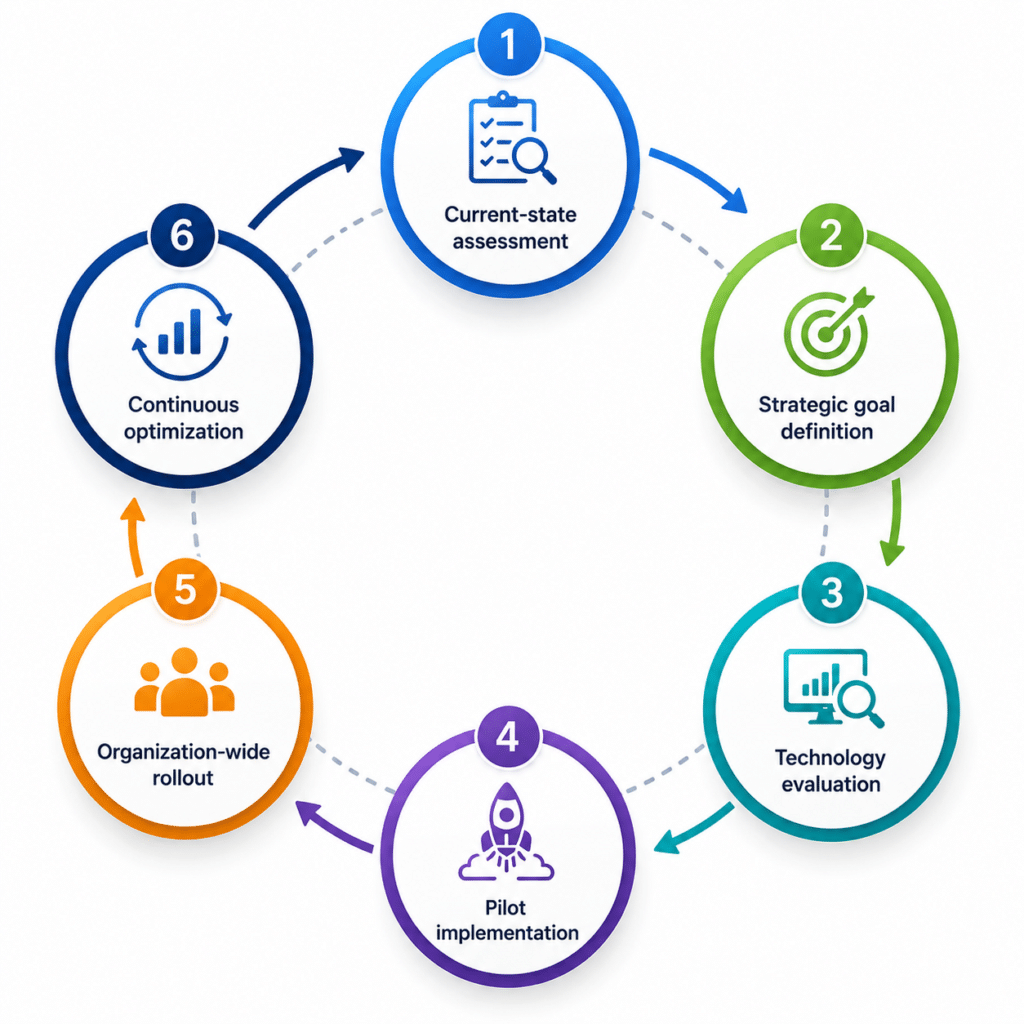
This phased approach minimizes risk and enhances adoption rates. Large organizations prioritize change management, understanding that people drive successful transformations. Leading companies invest significantly in employee engagement, training, and communication.
Cross-functional collaboration is also essential, as digital transformation affects every department, such as HR, finance, and marketing. Successful organizations form cross-functional teams that work toward shared goals, reducing silos and ensuring alignment. They continuously measure progress by establishing key performance indicators (KPIs) upfront, allowing leaders to identify challenges early and adjust strategies as needed.
A few common mistakes often prevent digital transformation efforts from delivering the results. Recognizing and avoiding them can significantly improve the chances of success.
By avoiding these mistakes, organizations can greatly improve their chances of achieving sustainable business outcomes.
Digital transformation is not a technology project; it is a business transformation enabled by technology. Organizations that combine a clear vision, strong leadership, employee engagement, and measurable goals are far more likely to achieve lasting success. The companies that thrive in the digital era are those that view transformation as a continuous journey rather than a one-time initiative.
Organizations that align their digital initiatives with business objectives, support employees during transitions, and adhere to a structured roadmap are much more likely to achieve sustainable growth, operational efficiency, and long-term value.